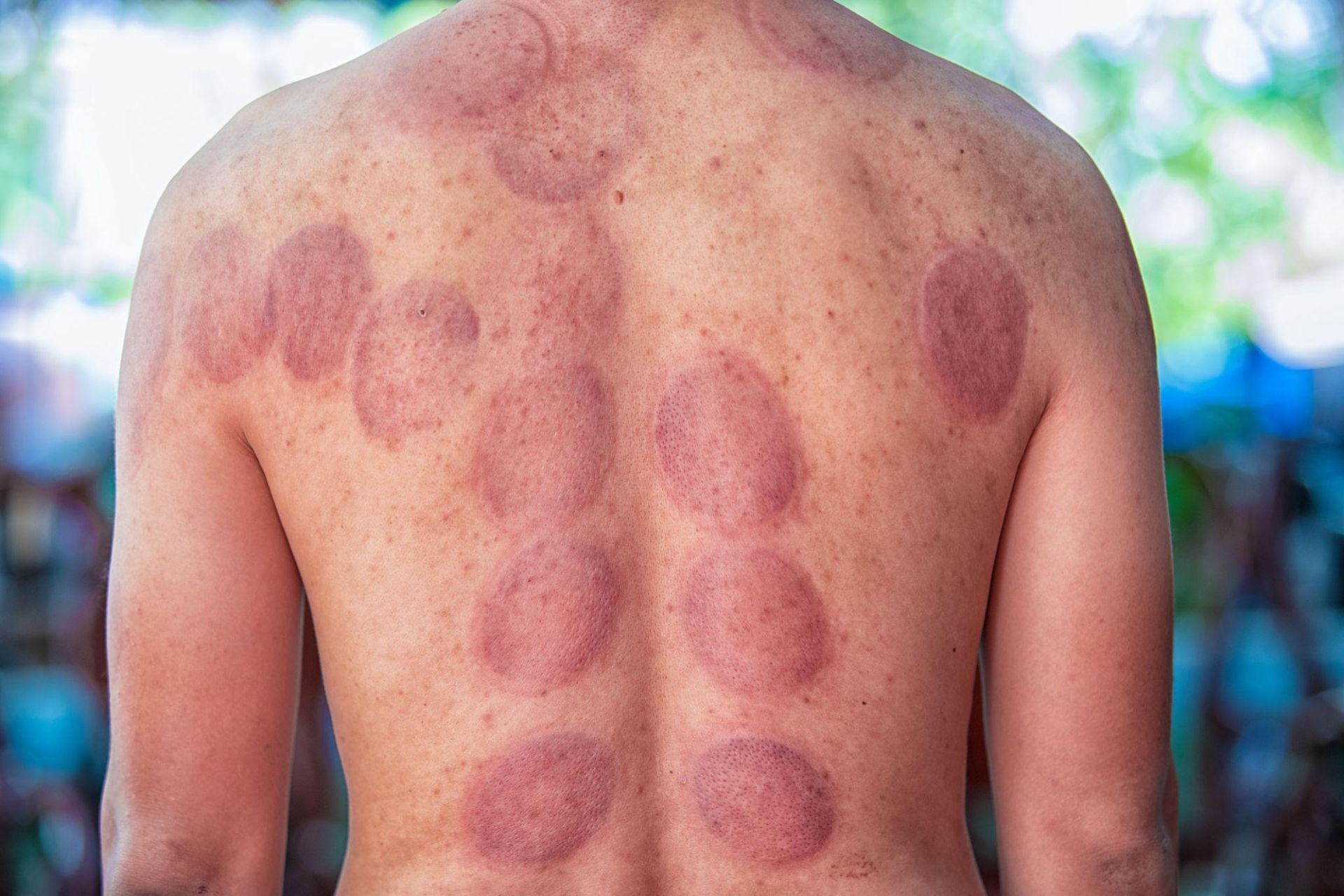
You’ve probably seen those round marks on someone’s shoulders or back and wondered: Does that hurt? Why are some darker than others?
Cupping marks can look dramatic, especially if you’ve never tried the treatment. Understanding what causes them can make the experience feel a lot less mysterious.
Understanding High Blood Pressure
What causes cupping marks?
Cupping uses suction to gently lift the skin and underlying tissue. That suction can cause tiny blood vessels near the surface to leak, leaving temporary discoloration called ecchymosis—a medical term for bruising.
Unlike a bruise caused by bumping into something, cupping marks come from suction. They may appear pink, red, purple, or darker depending on your skin tone and the intensity of treatment.
Does a darker mark mean something is wrong?
A darker mark does not automatically mean a more serious problem—or a more successful treatment.
The appearance can vary with suction strength, how long the cups stay in place, the area treated, and your individual tendency to bruise. Even during the same session, different areas may respond differently.
In Traditional Chinese Medicine, practitioners may discuss cupping using terms such as “Qi and Blood stagnation.” These are part of a traditional framework for understanding symptoms. A mark’s color alone is not a medical diagnosis or a reliable measure of circulation, inflammation, or organ health.
Do the marks mean toxins are leaving your body?
You may have seen charts claiming that darker cupping marks reveal more “toxins.”
There is no established scientific basis for using cupping marks to measure toxins or prove detoxification. The visible marks reflect the skin and small blood vessels’ response to suction. Research on cupping remains limited; it may help some people with
pain, but stronger studies are needed.
What if I barely get any marks?
That’s okay. Creating dark circles is not the goal of treatment, and little or no discoloration does not tell us whether a session was useful.
A more meaningful conversation is about how you feel afterward: Has your discomfort changed? Is movement more comfortable? How did your skin tolerate the treatment?
How long do the marks last?
Most fade within several days to about two weeks. Mild tenderness can happen, but severe pain is not an expected part of the experience. During treatment, let your practitioner know if the suction feels painful rather than simply tight or pulling. Give the skin time to recover.
Before treatment, tell your practitioner if you bruise easily, take blood-thinning medication, or have sensitive, irritated, or broken skin. These details help determine whether cupping is appropriate and how it should be adjusted.
At Lotus Acupuncture & Wellness, we welcome questions about cupping and how it might fit into your care. You should understand what to expect, feel comfortable throughout treatment, and know that darker marks are never something you need to aim for.
Curious about cupping? Let’s talk about whether it’s a good fit for you.
Acupuncture treatments are designed to:
✔ Restore proper Qi flow and balance in the body
✔ Reduce stress and promote relaxation
✔ Improve circulation and heart function
✔ Strengthen the kidneys and liver
✔ Support overall well-being
3 Mound Court, Unit 4, Merrimack, NH
(603) 377-6633
🌐
lotusacupuncturewellness.com