Learn what moxibustion is, how it feels, and why an acupuncturist may add this warming Traditional Chinese Medicine therapy to a personalized treatment at Lotus Acupuncture & Wellness in Merrimack, NH.
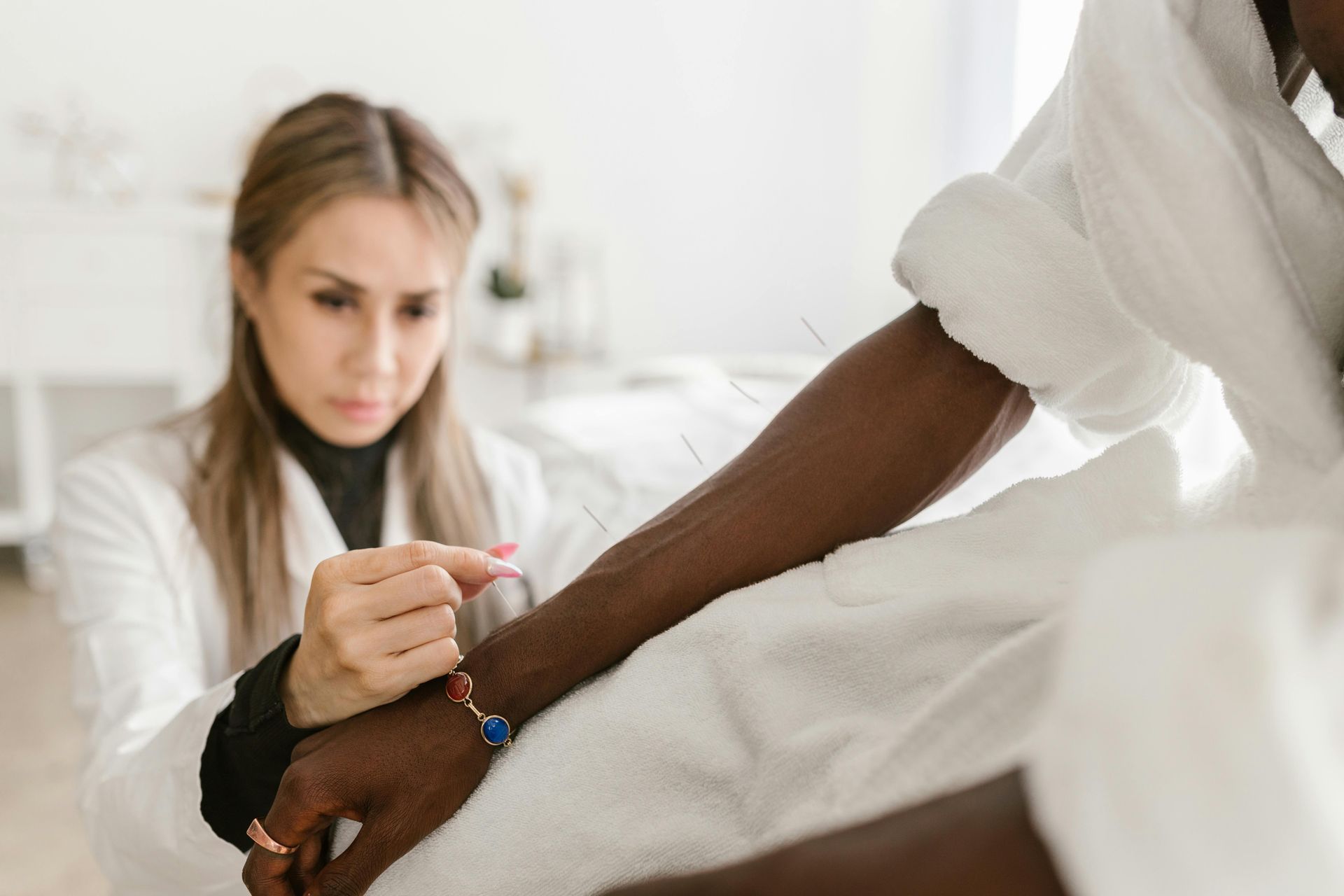
Have you ever noticed your acupuncturist warming an area of your body with a smoldering herbal stick or placing heat near an acupuncture point? This traditional therapy is called moxibustion, often shortened to moxa.
Moxibustion has been used within East Asian medicine for centuries. It involves carefully burning processed mugwort near an acupuncture point to provide focused warmth. Depending on the patient and treatment goal, it may be used by itself or alongside acupuncture.
The experience is usually gentle and comforting, but moxibustion is not appropriate for every person or condition. It should be selected and performed thoughtfully by a trained profession
What Is Moxibustion?
Moxibustion uses the dried leaves of mugwort, traditionally known as Ai Ye in Chinese herbal medicine. The leaves are processed into a soft material called moxa wool. This may be shaped into sticks, placed in specialized holders, formed into small cones, or used in other controlled ways.
The goal is not to burn the patient. Instead, the practitioner uses the heat produced by the moxa to warm a selected acupuncture point or region of the body.
Modern acupuncture offices may use traditional moxa, smokeless forms, or other warming devices depending on ventilation, patient sensitivity, and clinic policy.
What Does Moxibustion Feel Like?
Most patients describe moxibustion as a gradual, penetrating warmth. It may feel similar to a small heating source being held near the skin, but the heat is focused on a specific point or area.
During treatment, you may notice:
- Comfortable warmth spreading through the area
- A relaxing sensation
- The distinctive herbal aroma of burning mugwort
- Temporary mild redness from increased surface warmth
Moxibustion should never feel sharply hot, painful, or burning. Tell your practitioner immediately if the heat becomes uncomfortable. The distance, duration, or method can be adjusted or the treatment can be stopped.
Different Ways Moxa May Be Used
There are several forms of moxibustion. Your practitioner chooses the technique based on your health, sensitivity, treatment goals, and the location being treated.
Moxa Stick
A cigar-shaped moxa stick is lit and held above the skin. The practitioner moves or adjusts it to maintain comfortable warmth without direct contact.
Moxa Over an Acupuncture Point
Moxa may be used to warm a specific point before, during, or after needling. This combines point stimulation with focused heat.
Moxa Box or Warming Device
A specialized container may distribute warmth over a broader area such as the abdomen or lower back. Protective barriers and careful monitoring are important.
Moxa on a Needle
In some styles, a small amount of moxa is attached to the handle of an acupuncture needle and burned so warmth travels toward the treatment area. This technique requires professional training and close supervision.
Direct Moxibustion
Traditional direct methods place a small amount of moxa on or very close to the skin. Because these techniques carry a greater risk of burns and scarring, many modern practitioners favor indirect methods that keep the burning material away from the skin.
Why Might Your Acupuncturist Recommend Moxa?
Within Traditional Chinese Medicine, moxibustion is primarily used when warmth is considered therapeutically appropriate. The treatment may be selected to warm the channels, support the movement of Qi and Blood, and strengthen patterns described as deficient or cold.
An acupuncturist may consider moxa when a patient reports patterns such as:
- Pain or stiffness that feels better with heat
- Cold hands and feet
- A persistent feeling of being cold
- Certain digestive symptoms accompanied by coldness or weakness
- Fatigue associated with a traditional deficiency pattern
- Menstrual discomfort that improves with warmth
- Lower-back or joint discomfort with cold sensitivity
Recovery patterns in which gentle warmth is considered appropriate
These are examples rather than guarantees that moxibustion will be used. The practitioner considers your full health history, medications, symptoms, tongue, pulse, skin condition, and heat sensitivity before deciding.
Moxibustion for Pain and Stiffness
Many patients find warmth soothing for tight muscles and achy joints. Moxibustion may be incorporated into treatment when discomfort is aggravated by cold or improves with heat.
Research has examined moxibustion for conditions such as knee osteoarthritis and other pain concerns. Some reviews report promising results, but the quality of the available studies varies and firm conclusions cannot always be made. Moxibustion should therefore be viewed as complementary care, not a replacement for medical evaluation, physical therapy, medication, or other recommended treatment.
Moxibustion and Women’s Health
In Chinese medicine, warmth is sometimes added to treatment plans for menstrual pain, cycle concerns, fertility support, postpartum recovery, or other women’s-health patterns when cold or deficiency is part of the traditional assessment.
Moxibustion has also received attention for its traditional use in pregnancies with breech presentation. This is not an at-home treatment to begin without guidance. Anyone who is pregnant should consult their obstetric provider and work with a licensed acupuncturist who has appropriate pregnancy training. Timing, technique, medical history, and pregnancy complications all matter.
Moxa is not automatically appropriate simply because a symptom involves the menstrual cycle, fertility, or pregnancy. Treatment must be individualized.
How Does Moxibustion Differ From a Heat Lamp?
Both therapies provide warmth, but they are used differently.
A heat lamp generally warms a broader region throughout part of an acupuncture treatment. Moxibustion is a traditional technique that delivers more focused heat to specific acupuncture points or channels. Your practitioner may choose one, the other, both, or neither depending on the goal of the visit.
Is Moxibustion Safe?
Moxibustion can cause burns, allergic reactions, skin irritation, respiratory irritation, or infection if used improperly. Smoke may be uncomfortable for people with asthma, fragrance sensitivity, migraines, or other respiratory concerns.
Before treatment, tell your practitioner if you:
- Have asthma, chronic lung disease, or smoke sensitivity
- Are allergic or sensitive to mugwort, ragweed, or similar plants
- Have diabetes, neuropathy, or reduced skin sensation
- Have fragile skin, poor circulation, or difficulty healing
- Are taking medication that affects sensation or alertness
- Have an active rash, wound, infection, or recent burn in the area
- Are pregnant or may be pregnant
- Have a fever or feel unusually hot
Moxibustion should be monitored continuously. It should never be left burning unattended, and patients should not attempt unfamiliar moxa techniques at home without direct instruction from a qualified practitioner.
When Moxa May Not Be the Right Choice
Your acupuncturist may avoid or modify moxibustion when heat could aggravate the condition, the skin is damaged, sensation is impaired, smoke cannot be tolerated, or pregnancy requires additional precautions.
Chinese medicine treatment is not based on the idea that everyone needs warming. Some patients present with signs traditionally described as Heat, and adding moxa may be inappropriate. This is another reason professional pattern differentiation matters.
What to Expect if Moxa Is Added to Your Treatment
Your practitioner should explain why moxibustion is being recommended and what method will be used. The skin and surrounding area will be considered before treatment begins.
During the session:
- You will be positioned comfortably.
- Protective barriers may be used depending on the technique.
- The practitioner will remain attentive to the heat and your response.
- You should communicate immediately if the warmth becomes too intense.
The treated area may remain pleasantly warm for a short time afterward.
If you develop persistent redness, blistering, increasing pain, swelling, drainage, or another unexpected skin reaction after treatment, contact the practitioner and seek medical care when appropriate.
A Traditional Therapy Within Modern, Individualized Care
Moxibustion is one of several tools an acupuncturist may use to tailor treatment to the individual. It is not included automatically in every session, and more heat is not necessarily better.
At Lotus Acupuncture & Wellness, we consider your complete presentation before recommending acupuncture, moxibustion, cupping, Chinese herbal medicine, or another complementary therapy. Our goal is to provide thoughtful care that is comfortable, appropriate, and personalized.

Contact Lotus Acupuncture & Wellness
Ready to experience the best acupuncture care in Southern NH? Contact Lotus Acupuncture & Wellness today:
📍 Location: 3 Mound Court Unit 4, Merrimack, NH 03054
📞 Phone: 603-377-6633
📧 Email: lotus@lotusacupuncturewellness.com
🌐 Website: www.lotusacupuncturewellness.com
With expert care, a patient-centered approach, and an ADA-accessible facility, Lotus Acupuncture & Wellness is the top choice for acupuncture in Merrimack, Amherst, Bedford, Milford, Nashua, Manchester, and beyond.
Take the first step toward natural healing and well-being—schedule your appointment today! ✨